On 23 June 2026, CEI-Sphere joined standardisation experts, European projects, industry representatives and policymakers at the regional workshop “Standards for Cloud-Edge-IoT Ecosystems”, hosted by AFNOR in Paris.
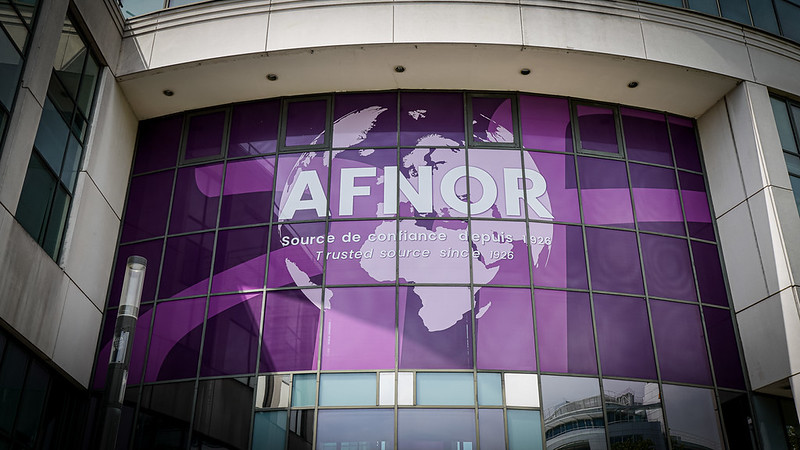
The workshop took place alongside the international meeting of ISO/IEC JTC 1/SC 41, the committee dedicated to the Internet of Things and Digital Twins, and also marked the final event of the INSTAR project. This setting created a valuable opportunity to connect European research and innovation activities with ongoing international standardisation work.
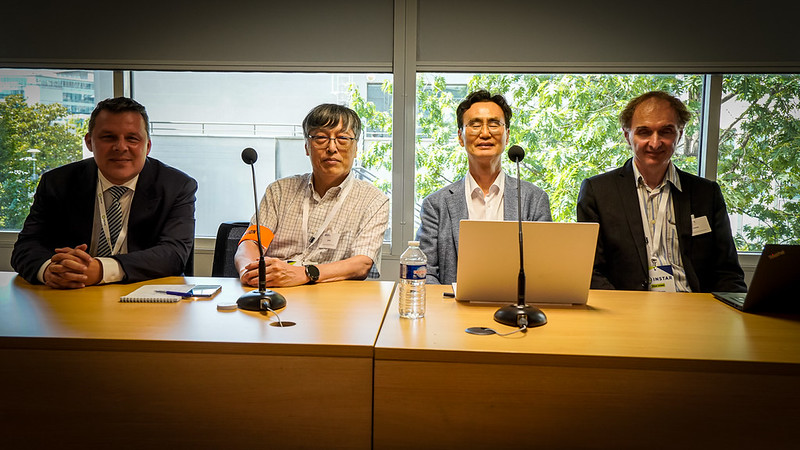
The opening keynotes provided a broad view of the current landscape. Yongjin Kim, Chair of ISO/IEC JTC 1/SC 41, presented the committee’s work on IoT systems, Digital Twins and emerging concepts such as Physical AI. Svet Mihaylov from the European Commission linked these developments to European priorities, including AI, open-source software and the Rolling Plan for ICT Standardisation. Damir Filipovic then highlighted the results achieved by INSTAR in strengthening cooperation with international partners such as the Republic of Korea, Japan, Canada, Singapore and Australia.
Connecting research with standardisation
One of the central messages of the workshop was that standards cannot be developed separately from real-world implementation.
Examples from EDF and IRT SystemX showed how Digital Twins are already being applied to complex industrial environments. These experiences highlighted the need to connect domain-specific requirements with horizontal standards, while integrating cybersecurity-by-design, zero-trust approaches and open-source technologies.
The Cloud-Edge-IoT session brought this discussion directly into the CEI-Sphere ecosystem.
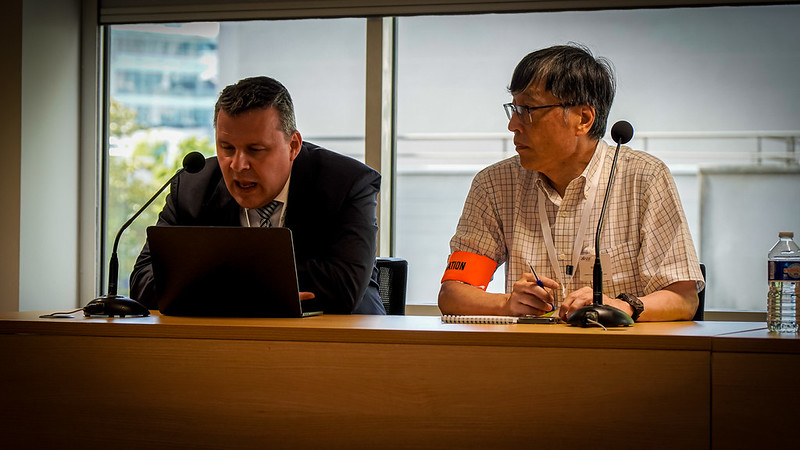
Antonio Kung from Trialog presented CEI-Sphere’s work and the use of the Hourglass Model as a practical way to describe digital ecosystems. By mapping stakeholders, capabilities, standards and open-source solutions, the model helps projects identify where interoperability is most important and where standardisation efforts can support reuse and scalability.
The session also included perspectives from the two CEI Large-Scale Pilots. Ignacio Lacalle from O-CEI presented the project’s blueprint approach for identifying, selecting and deploying energy-related CEI assets, together with its ambition to contribute towards a standard framework for CEI asset management.
Konstantinos Fragkos from COP-PILOT illustrated how a similar approach is being applied within the project’s AgriTech pilot. His presentation showed how physical infrastructure, orchestration platforms, AI and data services, user interfaces, open-source components and standards can be mapped as parts of the same ecosystem.
Standards, open source and data spaces
The workshop also examined the relationship between Data Spaces, digital sovereignty and standardisation.
The Eclipse Foundation presented current work around the Eclipse Dataspace Working Group, including open-source specifications for policies, credentials and data exchange protocols. The LICORICE project complemented this perspective by showing how self-sovereign identity and federated privacy technologies can support secure and interoperable Data Spaces.
Together, these contributions reinforced a recurring point throughout the afternoon: standards and open source should evolve together. Standards provide common rules and interfaces, while open-source implementations help demonstrate how those rules can work in practice and encourage broader adoption.
A shared direction
The workshop closed with an overview of INSTAR’s cooperation roadmaps across AI, cybersecurity, IoT and Edge, 6G, data and quantum technologies.
For CEI-Sphere, the event provided an important opportunity to position the Hourglass Model and the work of the Large-Scale Pilots within a wider international standardisation context.
The overall takeaway was that moving Cloud-Edge-IoT innovation from individual pilots to scalable ecosystems requires more than technological progress. It also depends on shared architectures, interoperable assets, open-source building blocks and sustained cooperation between research projects, industry, policymakers and standards organisations.